

Happy Acres
Role
UX Researcher
UX Designer
Team
2 Project Managers
7 Designers
Timeline
Spring 2023
Tools
FigJam
Figma
Midjourney

Overview
What is Happy Acres?
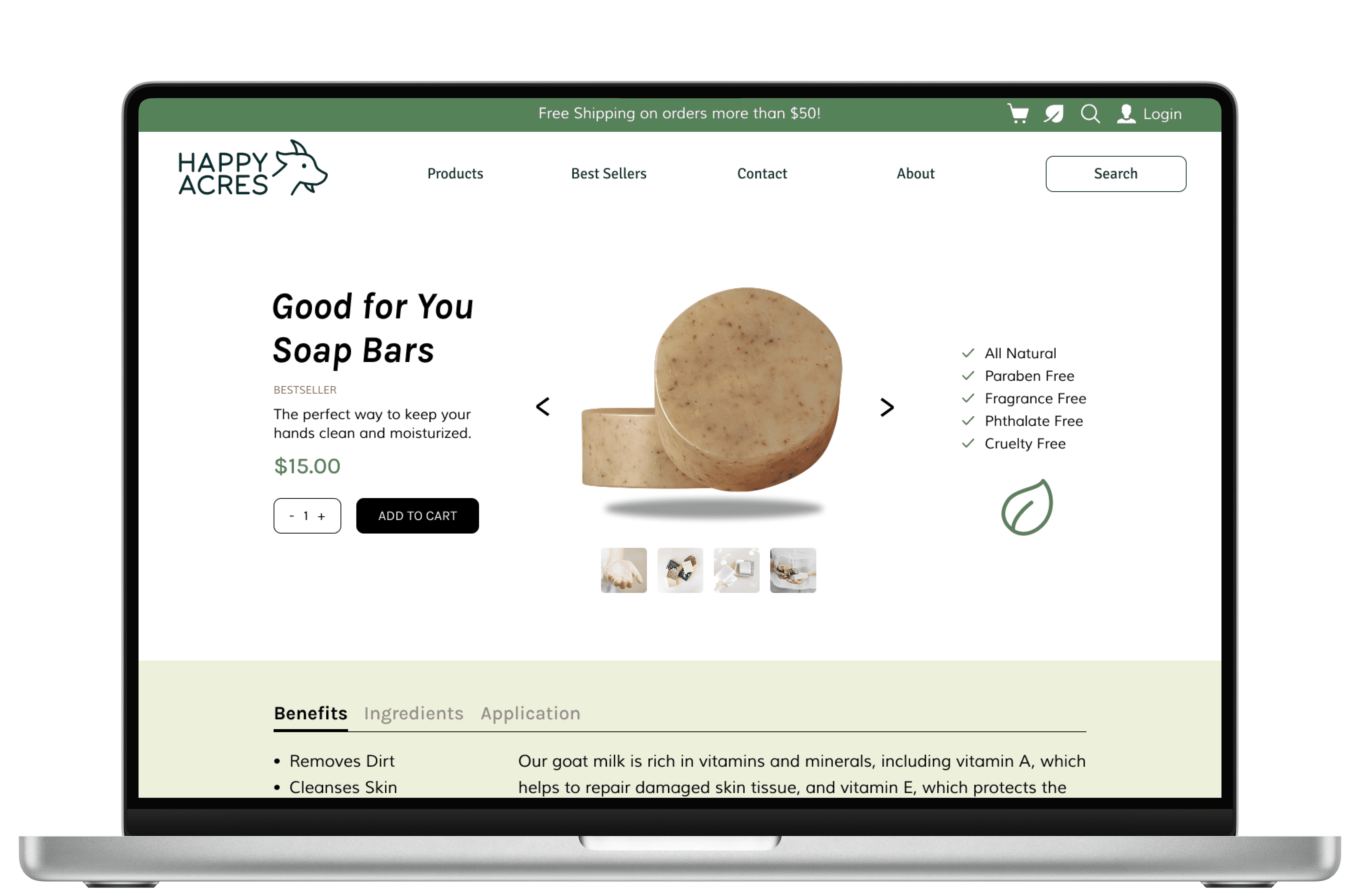
Happy Acres is a family-owned venture specializing in natural skincare products made from goat milk. The company is led by Shane, who took over the business from his grandmother. With a graduation date set for June, Shane reached out to the Happy Acres Design Team at Cal Poly to revitalize the Happy Acres online platform.

🧭
Improved
Navigation

Simplified and intuitive navigation to help users find products easily.
🔍
Enhanced product discovery
Organized product catalog for easy exploration and informed purchasing.
🎨
Visually appealing & User-friendly design
Design that reflects the brand’s natural, eco-conscious identity while creating a positive user experience.
The Problem
Happy Acres aimed to enhance their online platform to create a seamless and enjoyable shopping journey for customers looking for natural skincare products. Our team focused on addressing specific challenges and fulfilling the client’s goals:
Deliverables
The project timeline spanned from April 7th to May 12th, and the decided-upon deliverables included a website redesign, improved user experience, and an updated visual identity.
Research
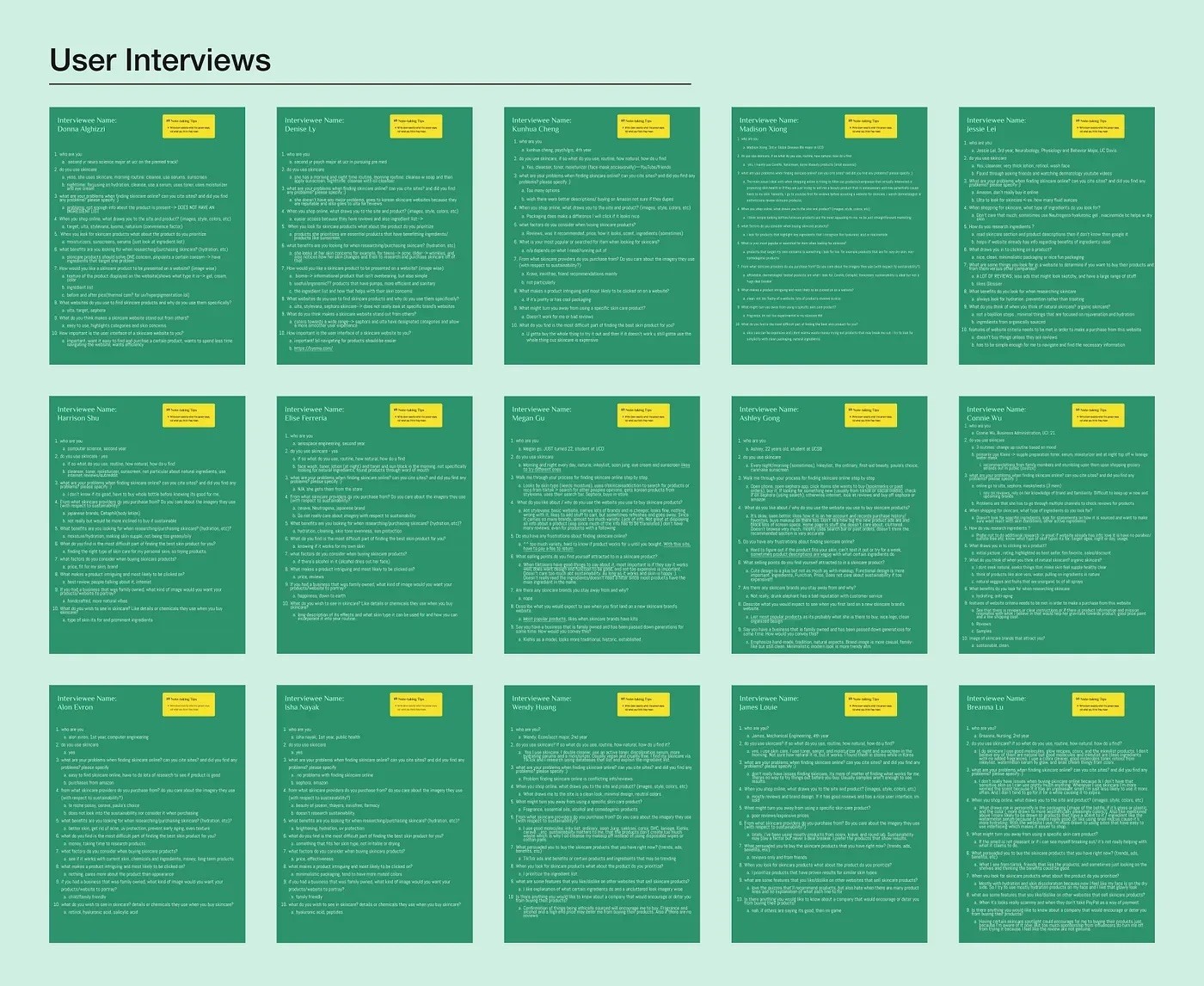
During Week 1, we conducted extensive UX research, which included user interviews. These interviews provided valuable insights into customer preferences, needs, and pain points. Additionally, we created detailed personas based on our research findings, allowing us to better understand and empathize with Happy Acres’ target audience.
My Area of Focus
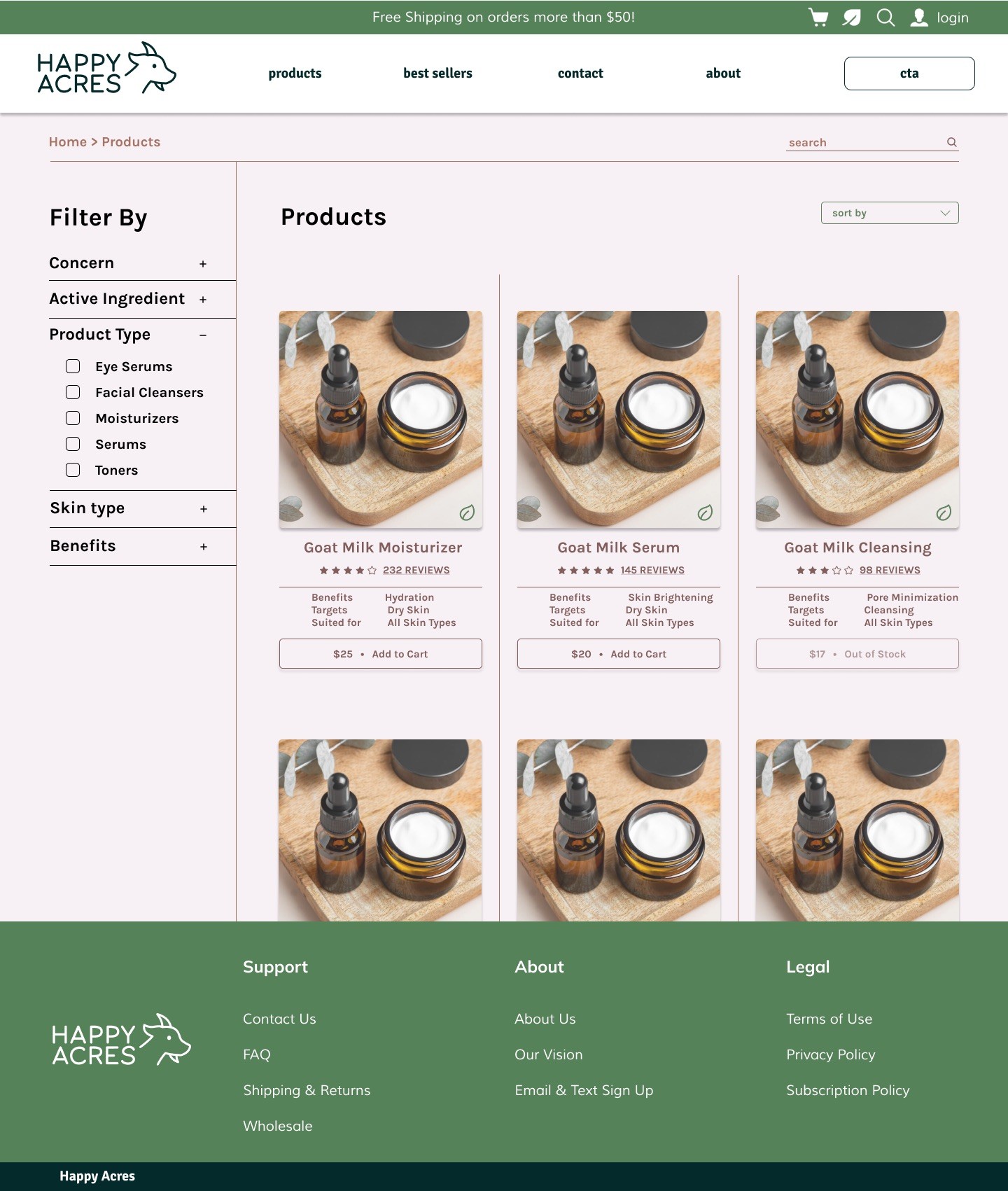
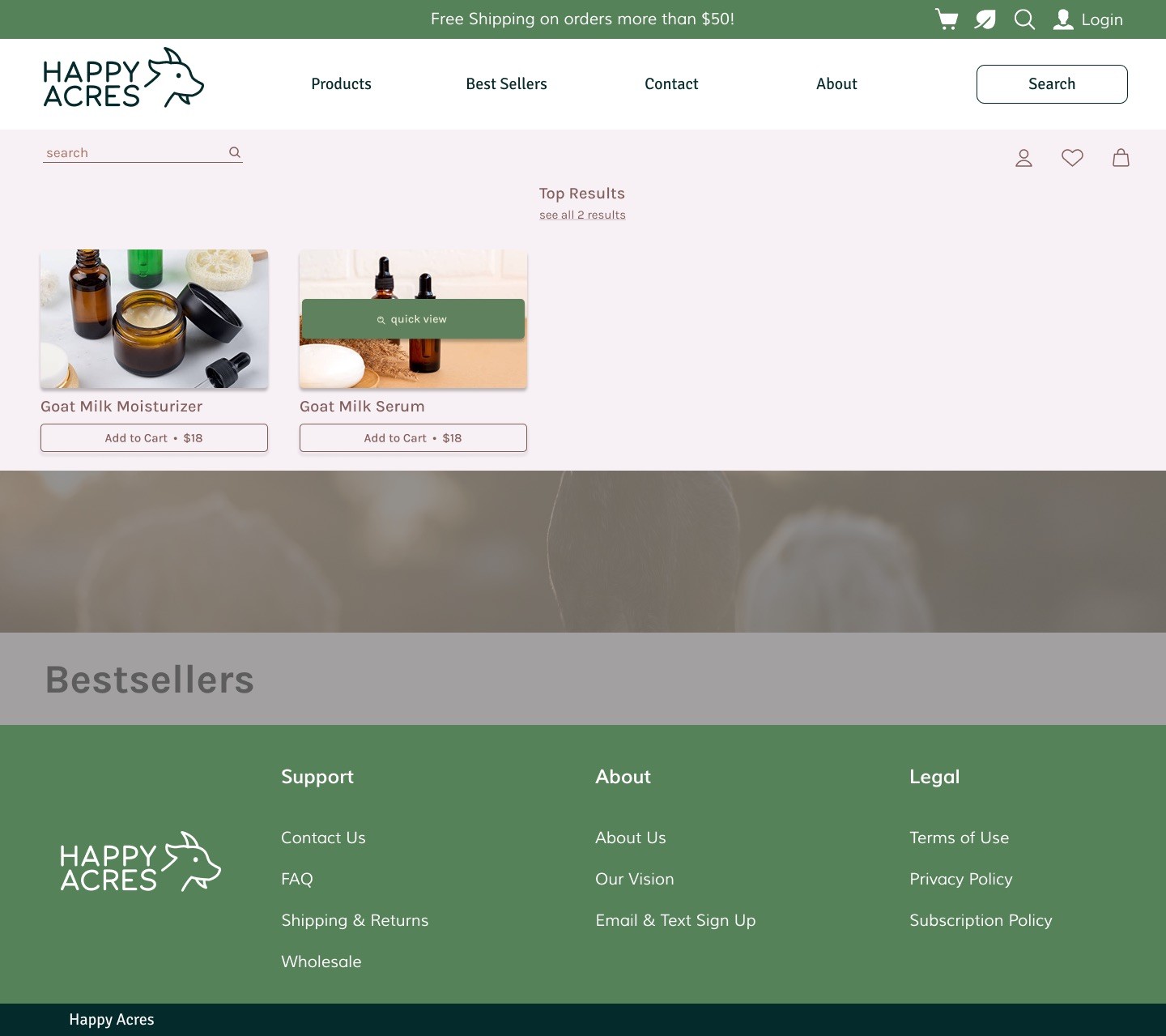
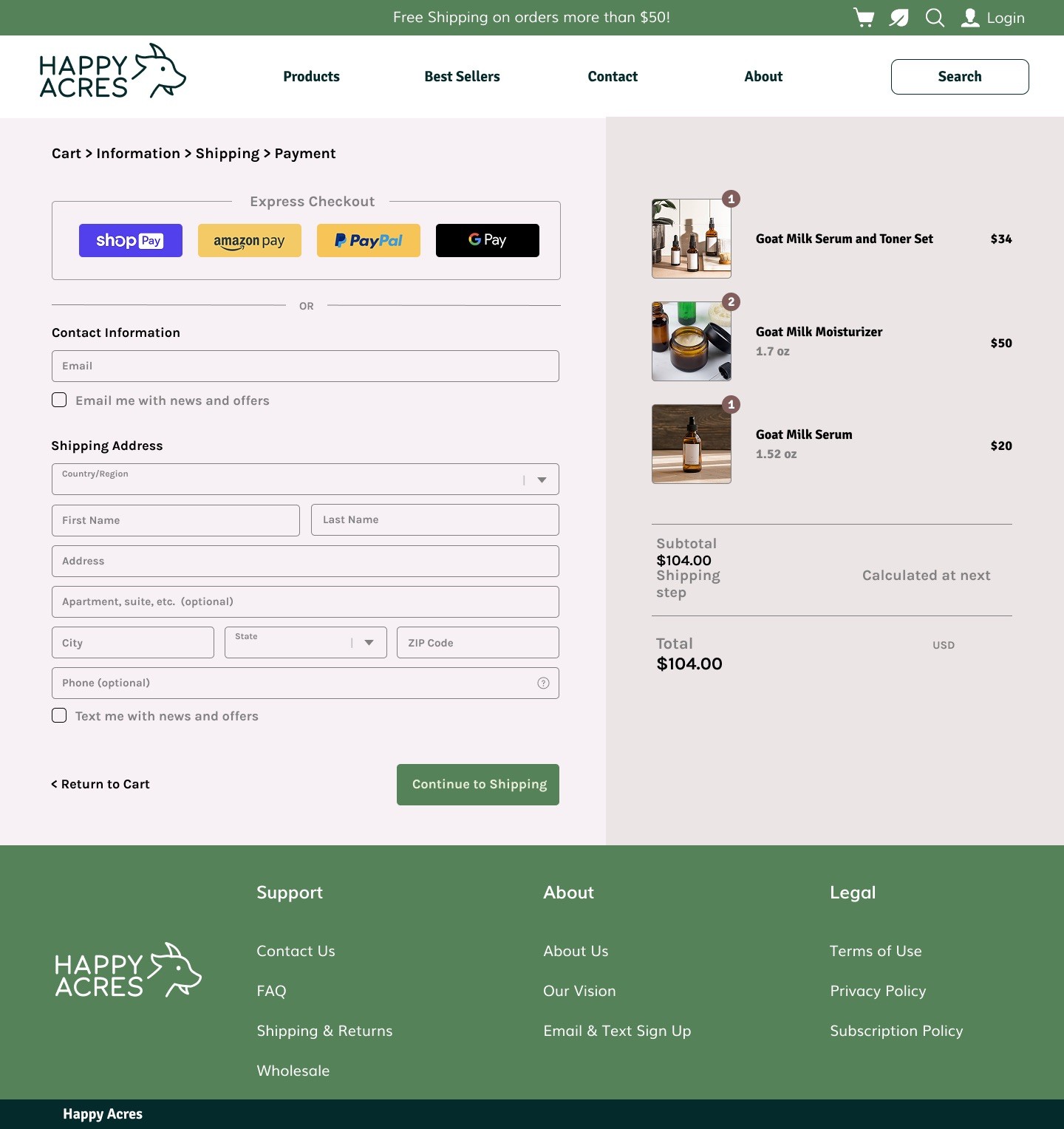
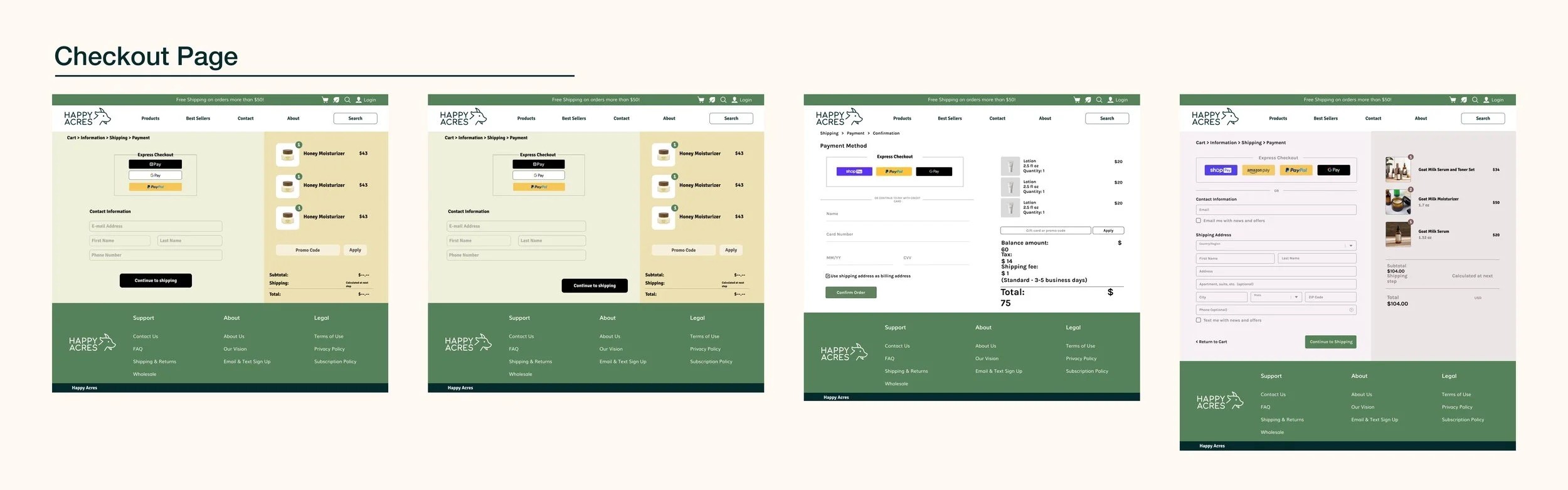
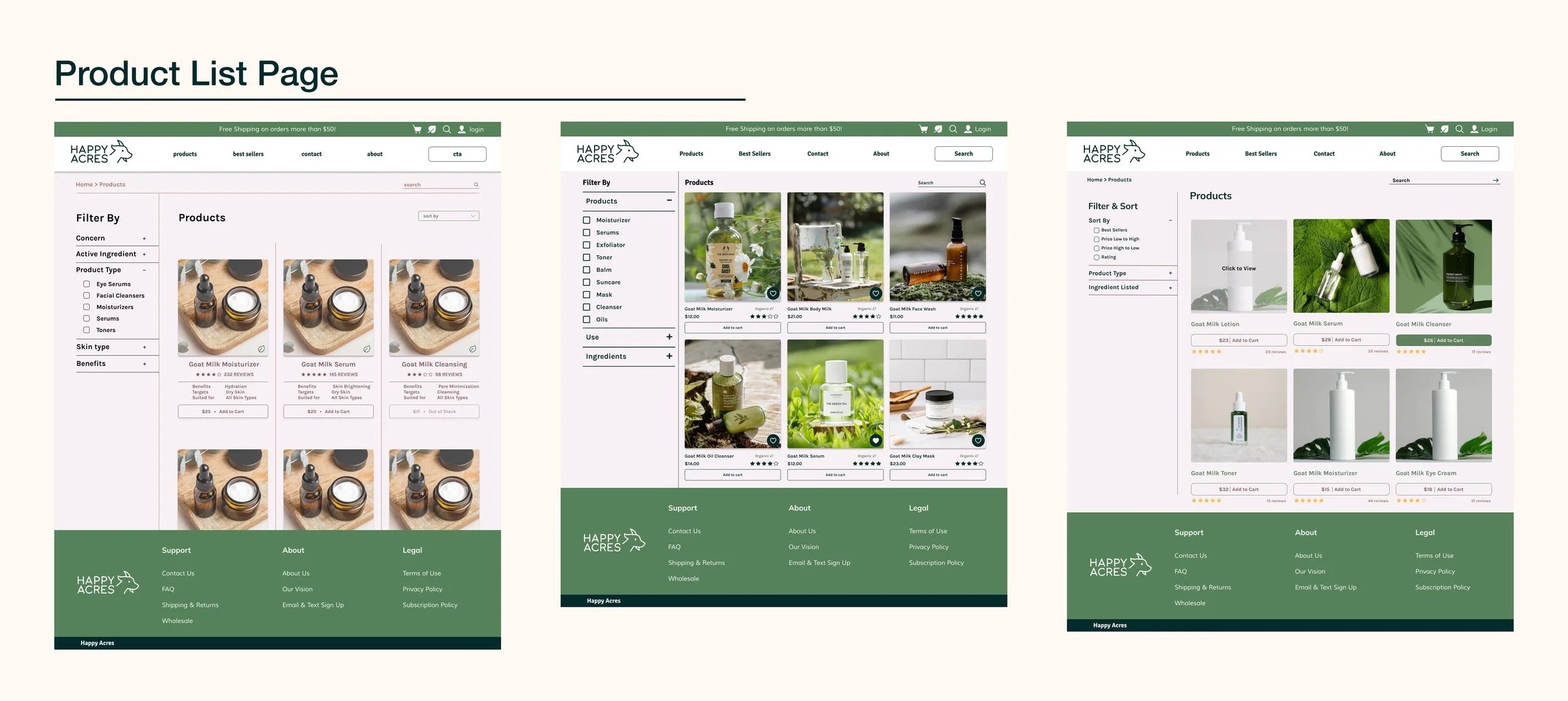
I had the role of designing the search bar tab, the product list page and the checkout screen. On the side of the product list, I prototyped a filtering element that would help users to find a product suited for their needs.
The next section showcases my early design iterations through to the final solution, including the contributions from the rest of the team.
Ideation
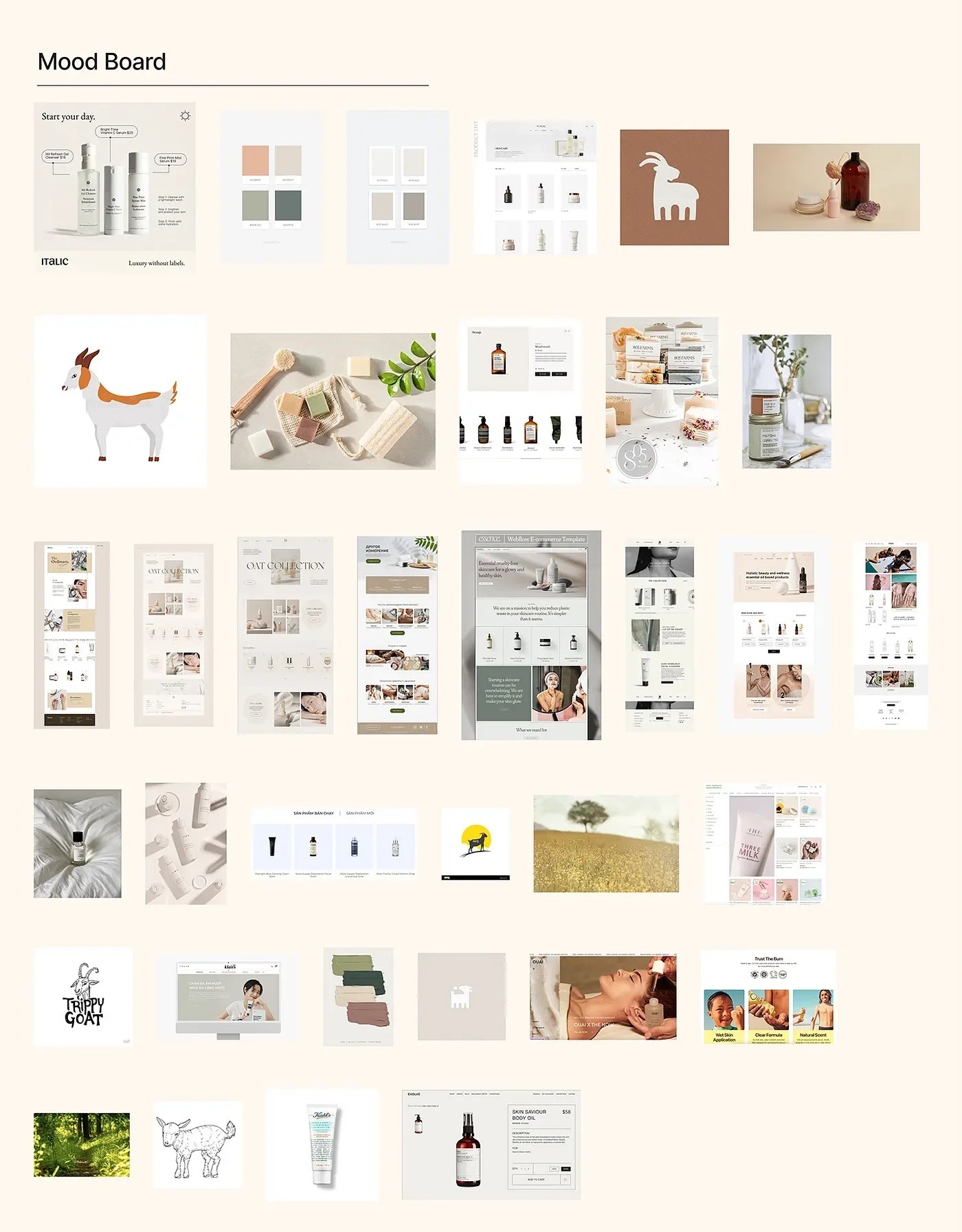
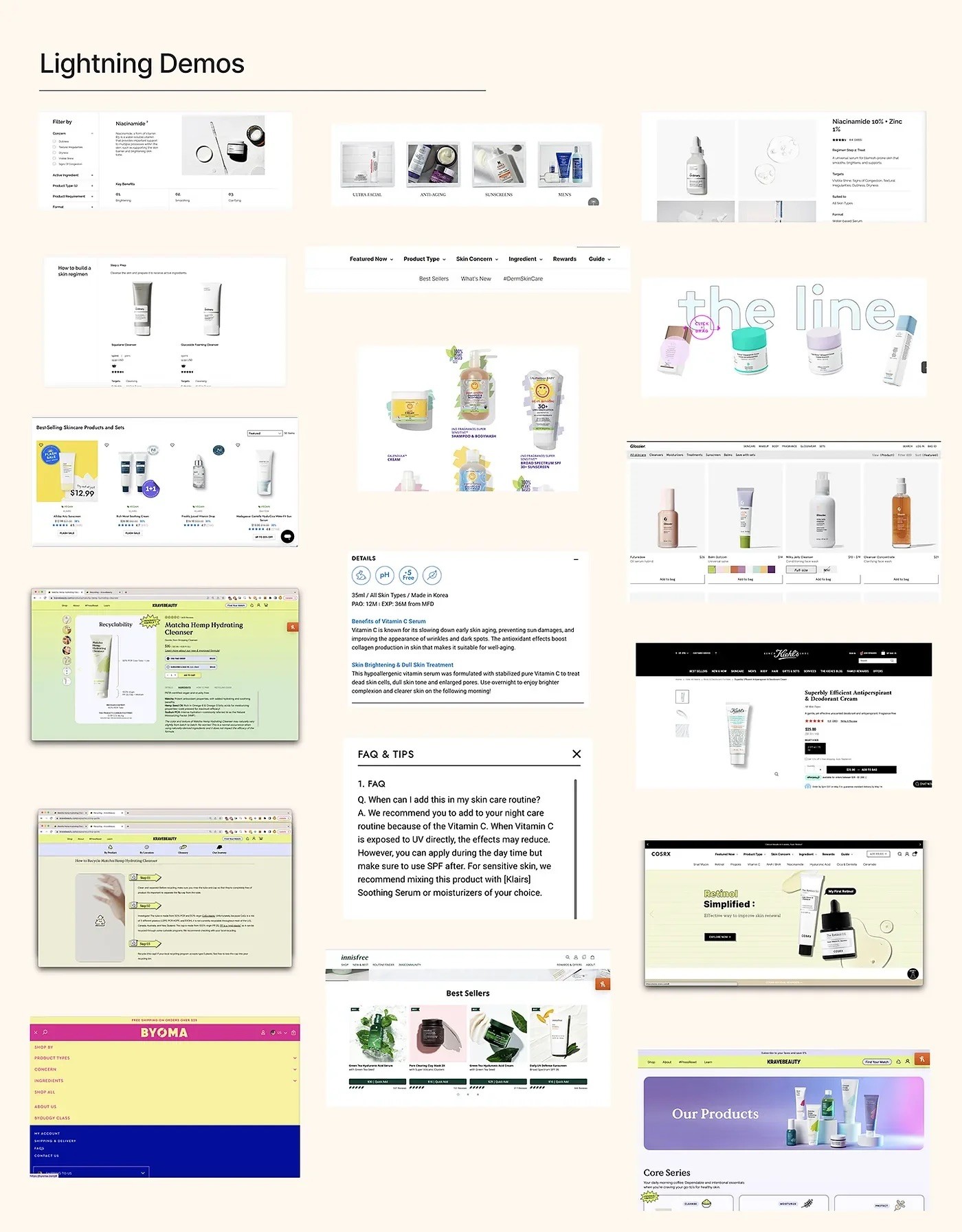
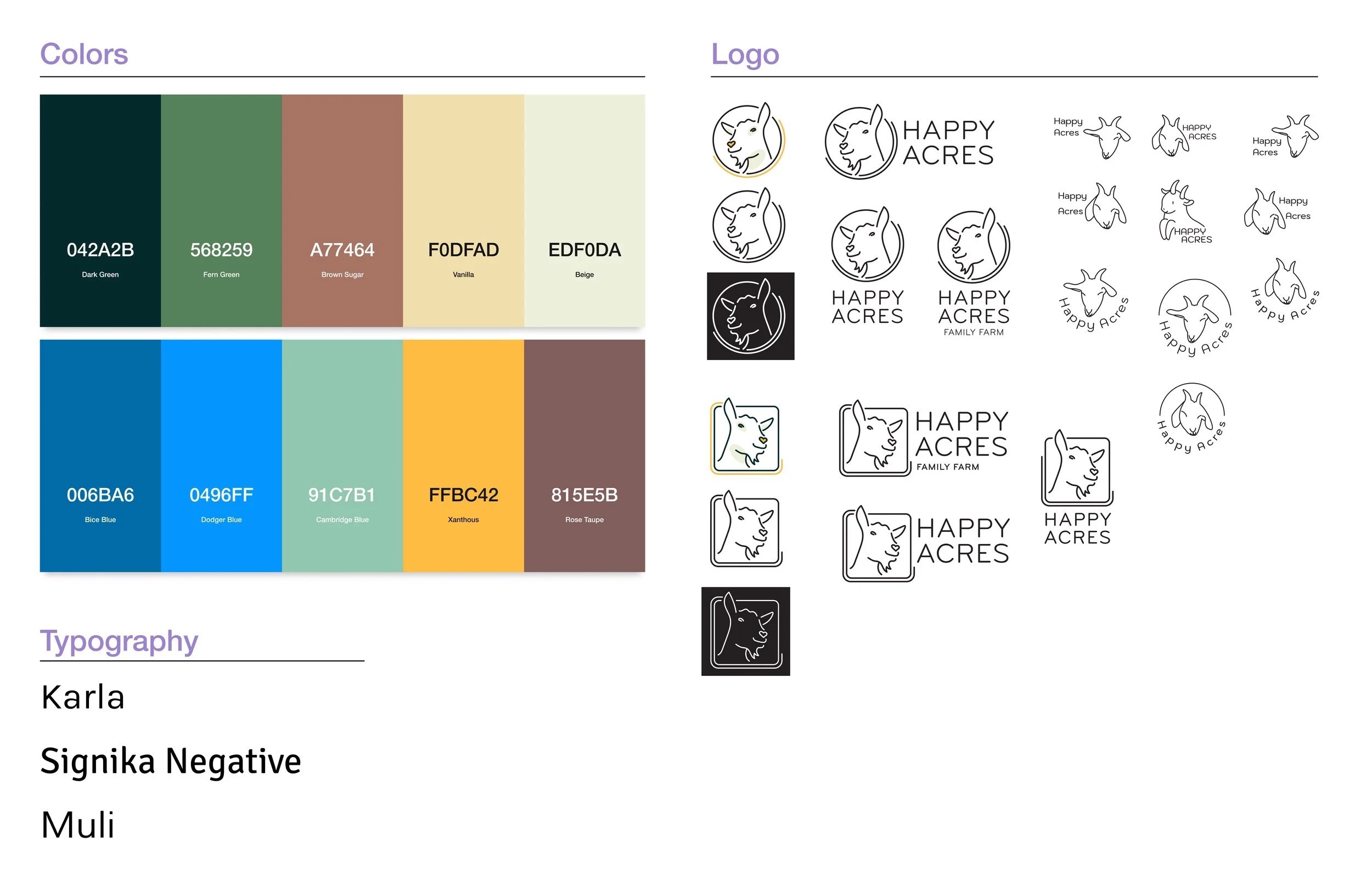
In Week 2, we engaged in moodboarding and lightning demos to explore various design directions. We aimed to create a design system that aligned with Happy Acres’ brand values, emphasizing natural aesthetics, soothing colors, and environmentally friendly elements. Our ideation sessions allowed us to generate creative concepts and find the most suitable design direction for the website redesign.
Design System
Design
Mid-fi Screens
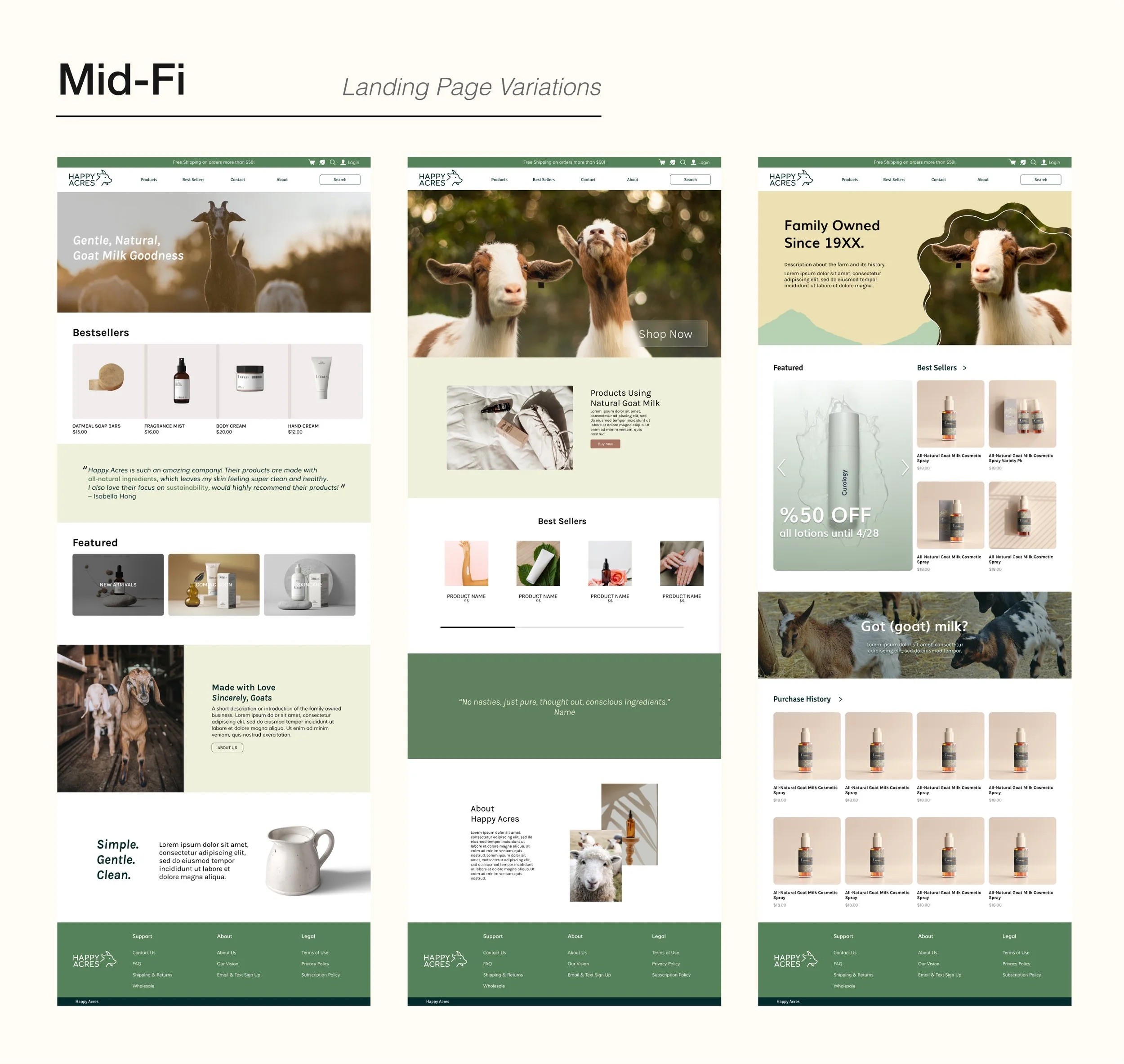
During Week 3, we moved into the prototyping phase. We started with mid-fidelity designs, focusing on rapidly iterating and refining the user interface. This iterative process allowed us to incorporate user feedback and make necessary adjustments, ensuring that the design aligned with Happy Acres’ requirements and preferences.
Usability Testing
To validate our design choices and gather user feedback, we conducted usability testing in Week 3. By observing user interactions and collecting feedback, we identified areas for improvement and gained insights into user preferences. This iterative testing approach ensured that the final design would meet the needs and expectations of Happy Acres’ target audience.
Solution
Final Prototype
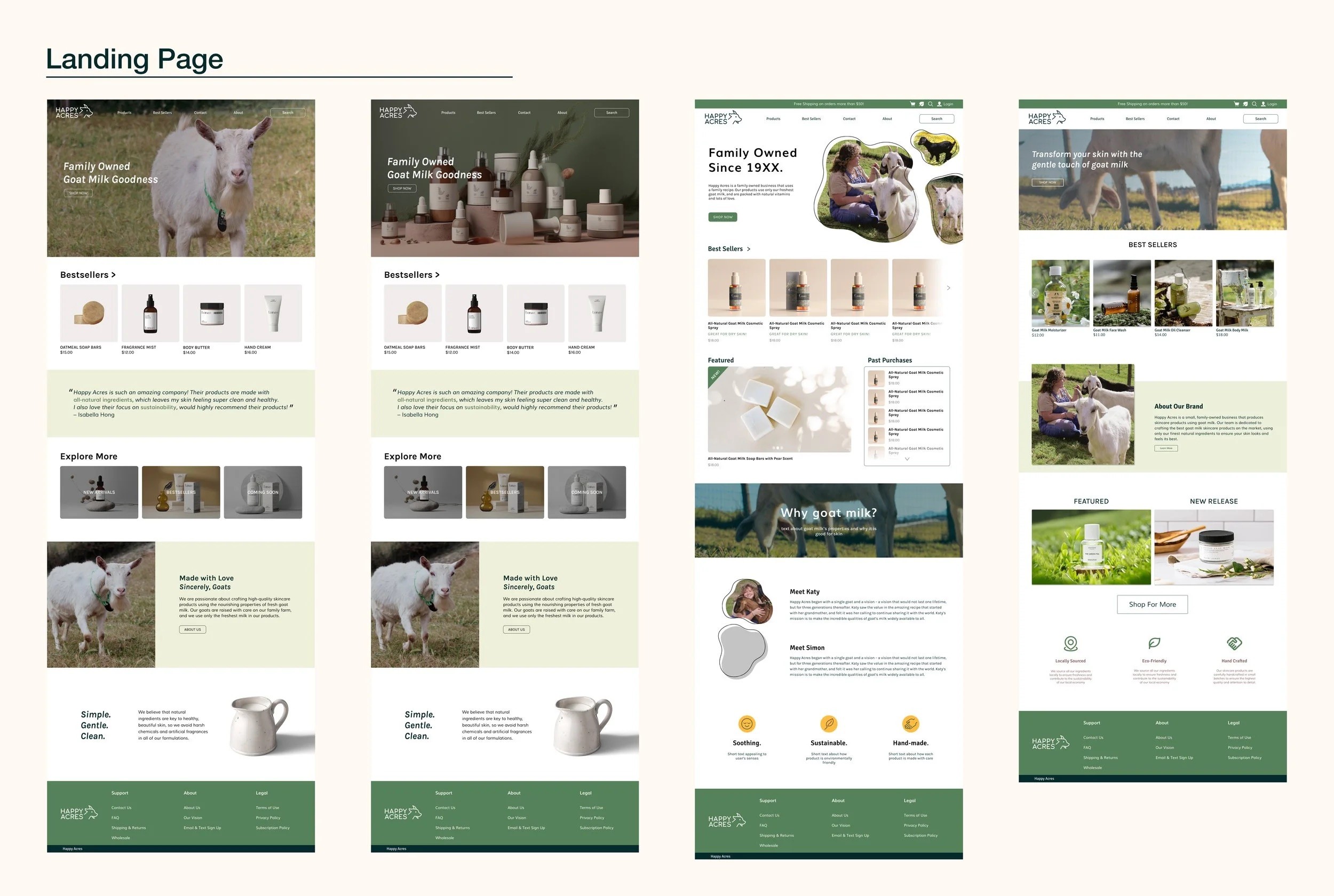
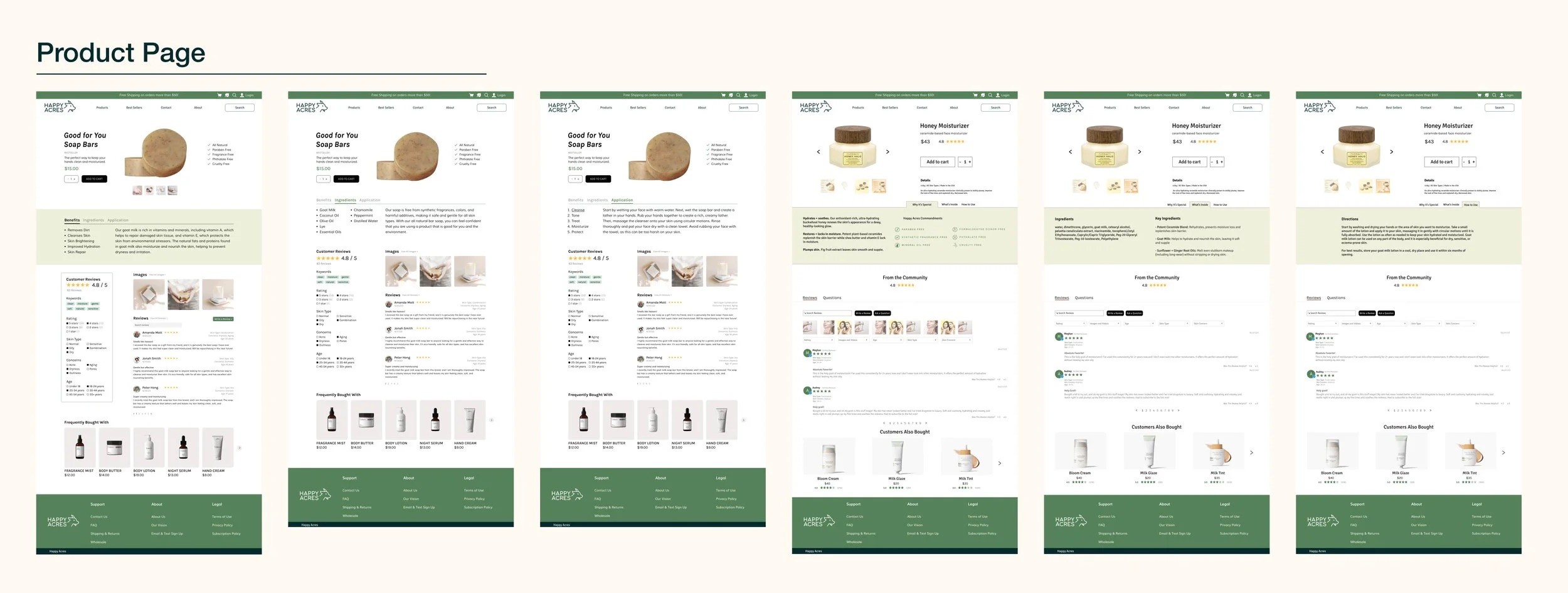
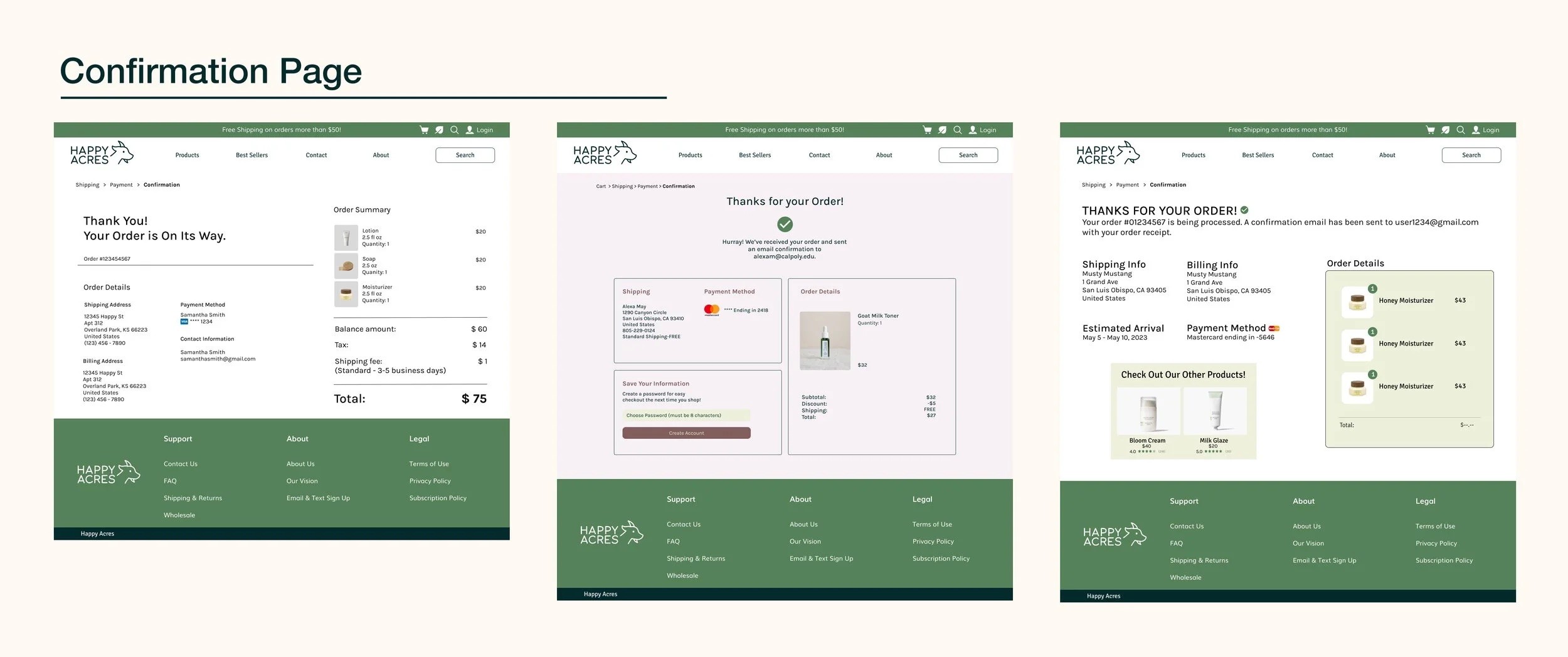
In Week 4, we had a work meeting to finalize the fidelity of the design. We incorporated user feedback and refined the high-fidelity prototypes to create a polished and visually engaging user interface. The design system was applied consistently across all screens, ensuring a cohesive and delightful user experience.
What's Next?
In the future, we recommend further user testing, gathering analytics data, and leveraging customer feedback to continue refining and optimizing the Happy Acres online platform. Continuous improvement and monitoring will ensure its long-term success and customer satisfaction.
Takeaways
Balancing simplicity & functionality

We learned how to create a design that feels clean and intuitive while still supporting all necessary features and storytelling elements.
User-centered design
By gathering feedback and iterating throughout the process, we discovered the importance of involving users at every stage to guide design decisions and improve the overall experience.
Reflection

Happy Acres
Role
UX Researcher
UX Designer
Team
2 Project Managers
7 Designers
Timeline
Spring 2023
Tools
FigJam
Figma
Midjourney
Overview
What is Happy Acres?
Happy Acres is a family-owned venture specializing in natural skincare products made from goat milk. The company is led by Shane, who took over the business from his grandmother. With a graduation date set for June, Shane reached out to the Happy Acres Design Team at Cal Poly to revitalize the Happy Acres online platform.
🧭
Improved
Navigation
Simplified and intuitive navigation to help users find products easily.
🔍
Enhanced product discovery
Organized product catalog for easy exploration and informed purchasing.
🎨
Visually appealing & User-friendly design
Design that reflects the brand’s natural, eco-conscious identity while creating a positive user experience.
The Problem
Happy Acres aimed to enhance their online platform to create a seamless and enjoyable shopping journey for customers looking for natural skincare products. Our team focused on addressing specific challenges and fulfilling the client’s goals:
Deliverables
The project timeline spanned from April 7th to May 12th, and the decided-upon deliverables included a website redesign, improved user experience, and an updated visual identity.
Research
During Week 1, we conducted extensive UX research, which included user interviews. These interviews provided valuable insights into customer preferences, needs, and pain points. Additionally, we created detailed personas based on our research findings, allowing us to better understand and empathize with Happy Acres’ target audience.
My Area of Focus
I had the role of designing the search bar tab, the product list page and the checkout screen. On the side of the product list, I prototyped a filtering element that would help users to find a product suited for their needs.
The next section showcases my early design iterations through to the final solution, including the contributions from the rest of the team.
Ideation
In Week 2, we engaged in moodboarding and lightning demos to explore various design directions. We aimed to create a design system that aligned with Happy Acres’ brand values, emphasizing natural aesthetics, soothing colors, and environmentally friendly elements. Our ideation sessions allowed us to generate creative concepts and find the most suitable design direction for the website redesign.
Design System
Design
Mid-fi Screens
During Week 3, we moved into the prototyping phase. We started with mid-fidelity designs, focusing on rapidly iterating and refining the user interface. This iterative process allowed us to incorporate user feedback and make necessary adjustments, ensuring that the design aligned with Happy Acres’ requirements and preferences.
Usability Testing
To validate our design choices and gather user feedback, we conducted usability testing in Week 3. By observing user interactions and collecting feedback, we identified areas for improvement and gained insights into user preferences. This iterative testing approach ensured that the final design would meet the needs and expectations of Happy Acres’ target audience.
Solution
Final Prototype
In Week 4, we had a work meeting to finalize the fidelity of the design. We incorporated user feedback and refined the high-fidelity prototypes to create a polished and visually engaging user interface. The design system was applied consistently across all screens, ensuring a cohesive and delightful user experience.
What's Next?
In the future, we recommend further user testing, gathering analytics data, and leveraging customer feedback to continue refining and optimizing the Happy Acres online platform. Continuous improvement and monitoring will ensure its long-term success and customer satisfaction.
Takeaways
Balancing simplicity & functionality
We learned how to create a design that feels clean and intuitive while still supporting all necessary features and storytelling elements.
User-centered design
By gathering feedback and iterating throughout the process, we discovered the importance of involving users at every stage to guide design decisions and improve the overall experience.
Reflection
Happy Acres
Role
UX Researcher
UX Designer
Team
2 Proj. Managers
7 Designers
Timeline
Spring 2023
Tools
FigJam
Figma
Midjourney
Overview
What is Happy Acres?
Happy Acres is a family-owned venture specializing in natural skincare products made from goat milk. The company is led by Shane, who took over the business from his grandmother. With a graduation date set for June, Shane reached out to the Happy Acres Design Team at Cal Poly to revitalize the Happy Acres online platform.
🧭
Improved
Navigation
Simplified and intuitive navigation to help users find products easily.
🔍
Enhanced product discovery
Organized product catalog for easy exploration and informed purchasing.
🎨
Visually appealing & User-friendly design
Design that reflects the brand’s natural, eco-conscious identity while creating a positive user experience.
The Problem
Happy Acres aimed to enhance their online platform to create a seamless and enjoyable shopping journey for customers looking for natural skincare products. Our team focused on addressing specific challenges and fulfilling the client’s goals:
Deliverables
The project timeline spanned from April 7th to May 12th, and the decided-upon deliverables included a website redesign, improved user experience, and an updated visual identity.
Research
During Week 1, we conducted extensive UX research, which included user interviews. These interviews provided valuable insights into customer preferences, needs, and pain points. Additionally, we created detailed personas based on our research findings, allowing us to better understand and empathize with Happy Acres’ target audience.
The next section showcases my early design iterations through to the final solution, including the contributions from the rest of the team.
My Area of Focus
I had the role of designing the search bar tab, the product list page and the checkout screen. On the side of the product list, I prototyped a filtering element that would help users to find a product suited for their needs.
Ideation
In Week 2, we engaged in moodboarding and lightning demos to explore various design directions. We aimed to create a design system that aligned with Happy Acres’ brand values, emphasizing natural aesthetics, soothing colors, and environmentally friendly elements. Our ideation sessions allowed us to generate creative concepts and find the most suitable design direction for the website redesign.
Design
Design Systems
Mid-fi Screens
During Week 3, we moved into the prototyping phase. We started with mid-fidelity designs, focusing on rapidly iterating and refining the user interface. This iterative process allowed us to incorporate user feedback and make necessary adjustments, ensuring that the design aligned with Happy Acres’ requirements and preferences.
Usability Testing
To validate our design choices and gather user feedback, we conducted usability testing in Week 3. By observing user interactions and collecting feedback, we identified areas for improvement and gained insights into user preferences. This iterative testing approach ensured that the final design would meet the needs and expectations of Happy Acres’ target audience.
Solution
Final Prototype
In Week 4, we had a work meeting to finalize the fidelity of the design. We incorporated user feedback and refined the high-fidelity prototypes to create a polished and visually engaging user interface. The design system was applied consistently across all screens, ensuring a cohesive and delightful user experience.
What's Next?
In the future, we recommend further user testing, gathering analytics data, and leveraging customer feedback to continue refining and optimizing the Happy Acres online platform. Continuous improvement and monitoring will ensure its long-term success and customer satisfaction.
Reflection
Takeaways
Balancing simplicity & functionality
We learned how to create a design that feels clean and intuitive while still supporting all necessary features and storytelling elements.
User-centered Design
By gathering feedback and iterating throughout the process, we discovered the importance of involving users at every stage to guide design decisions and improve the overall experience.

Happy Acres
Role
UX Researcher
UX Designer
Team
2 Project Managers
7 Designers
Timeline
Spring 2023
Tools
FigJam
Figma
Midjourney
Overview
What is Happy Acres?
Happy Acres is a family-owned venture specializing in natural skincare products made from goat milk. The company is led by Shane, who took over the business from his grandmother. With a graduation date set for June, Shane reached out to the Happy Acres Design Team at Cal Poly to revitalize the Happy Acres online platform.
🧭
Improved
Navigation
Simplified and intuitive navigation to help users find products easily.
🔍
Enhanced product discovery
Organized product catalog for easy exploration and informed purchasing.
🎨
Visually appealing & User-friendly design
Design that reflects the brand’s natural, eco-conscious identity while creating a positive user experience.
The Problem
Happy Acres aimed to enhance their online platform to create a seamless and enjoyable shopping journey for customers looking for natural skincare products. Our team focused on addressing specific challenges and fulfilling the client’s goals:
Deliverables
The project timeline spanned from April 7th to May 12th, and the decided-upon deliverables included a website redesign, improved user experience, and an updated visual identity.
Research
During Week 1, we conducted extensive UX research, which included user interviews. These interviews provided valuable insights into customer preferences, needs, and pain points. Additionally, we created detailed personas based on our research findings, allowing us to better understand and empathize with Happy Acres’ target audience.
My Area of Focus
I had the role of designing the search bar tab, the product list page and the checkout screen. On the side of the product list, I prototyped a filtering element that would help users to find a product suited for their needs.
The next section showcases my early design iterations through to the final solution, including the contributions from the rest of the team.
Ideation
In Week 2, we engaged in moodboarding and lightning demos to explore various design directions. We aimed to create a design system that aligned with Happy Acres’ brand values, emphasizing natural aesthetics, soothing colors, and environmentally friendly elements. Our ideation sessions allowed us to generate creative concepts and find the most suitable design direction for the website redesign.
Design System
Design
Mid-fi Screens
During Week 3, we moved into the prototyping phase. We started with mid-fidelity designs, focusing on rapidly iterating and refining the user interface. This iterative process allowed us to incorporate user feedback and make necessary adjustments, ensuring that the design aligned with Happy Acres’ requirements and preferences.
Usability Testing
To validate our design choices and gather user feedback, we conducted usability testing in Week 3. By observing user interactions and collecting feedback, we identified areas for improvement and gained insights into user preferences. This iterative testing approach ensured that the final design would meet the needs and expectations of Happy Acres’ target audience.
Solution
Final Prototype
In Week 4, we had a work meeting to finalize the fidelity of the design. We incorporated user feedback and refined the high-fidelity prototypes to create a polished and visually engaging user interface. The design system was applied consistently across all screens, ensuring a cohesive and delightful user experience.
What's Next?
In the future, we recommend further user testing, gathering analytics data, and leveraging customer feedback to continue refining and optimizing the Happy Acres online platform. Continuous improvement and monitoring will ensure its long-term success and customer satisfaction.
Takeaways
Balancing simplicity & functionality
We learned how to create a design that feels clean and intuitive while still supporting all necessary features and storytelling elements.
User-centered design
By gathering feedback and iterating throughout the process, we discovered the importance of involving users at every stage to guide design decisions and improve the overall experience.
Reflection
Happy Acres
Role
UX Researcher
UX Designer
Team
2 Project Managers
7 Designers
Timeline
Spring 2023
Tools
FigJam
Figma
Midjourney
Overview
What is Happy Acres?
Happy Acres is a family-owned venture specializing in natural skincare products made from goat milk. The company is led by Shane, who took over the business from his grandmother. With a graduation date set for June, Shane reached out to the Happy Acres Design Team at Cal Poly to revitalize the Happy Acres online platform.
🧭
Improved
Navigation
Simplified and intuitive navigation to help users find products easily.
🔍
Enhanced product discovery
Organized product catalog for easy exploration and informed purchasing.
🎨
Visually appealing & User-friendly design
Design that reflects the brand’s natural, eco-conscious identity while creating a positive user experience.
The Problem
Happy Acres aimed to enhance their online platform to create a seamless and enjoyable shopping journey for customers looking for natural skincare products. Our team focused on addressing specific challenges and fulfilling the client’s goals:
Deliverables
The project timeline spanned from April 7th to May 12th, and the decided-upon deliverables included a website redesign, improved user experience, and an updated visual identity.
Research
During Week 1, we conducted extensive UX research, which included user interviews. These interviews provided valuable insights into customer preferences, needs, and pain points. Additionally, we created detailed personas based on our research findings, allowing us to better understand and empathize with Happy Acres’ target audience.
My Area of Focus
I had the role of designing the search bar tab, the product list page and the checkout screen. On the side of the product list, I prototyped a filtering element that would help users to find a product suited for their needs.
The next section showcases my early design iterations through to the final solution, including the contributions from the rest of the team.
Ideation
In Week 2, we engaged in moodboarding and lightning demos to explore various design directions. We aimed to create a design system that aligned with Happy Acres’ brand values, emphasizing natural aesthetics, soothing colors, and environmentally friendly elements. Our ideation sessions allowed us to generate creative concepts and find the most suitable design direction for the website redesign.
Design System
Design
Mid-fi Screens
During Week 3, we moved into the prototyping phase. We started with mid-fidelity designs, focusing on rapidly iterating and refining the user interface. This iterative process allowed us to incorporate user feedback and make necessary adjustments, ensuring that the design aligned with Happy Acres’ requirements and preferences.
Usability Testing
To validate our design choices and gather user feedback, we conducted usability testing in Week 3. By observing user interactions and collecting feedback, we identified areas for improvement and gained insights into user preferences. This iterative testing approach ensured that the final design would meet the needs and expectations of Happy Acres’ target audience.
Solution
Final Prototype
In Week 4, we had a work meeting to finalize the fidelity of the design. We incorporated user feedback and refined the high-fidelity prototypes to create a polished and visually engaging user interface. The design system was applied consistently across all screens, ensuring a cohesive and delightful user experience.
What's Next?
In the future, we recommend further user testing, gathering analytics data, and leveraging customer feedback to continue refining and optimizing the Happy Acres online platform. Continuous improvement and monitoring will ensure its long-term success and customer satisfaction.
Takeaways
Balancing simplicity & functionality
We learned how to create a design that feels clean and intuitive while still supporting all necessary features and storytelling elements.
User-centered design
By gathering feedback and iterating throughout the process, we discovered the importance of involving users at every stage to guide design decisions and improve the overall experience.
Reflection
Happy Acres
Role
UX Researcher
UX Designer
Team
2 Proj. Managers
7 Designers
Timeline
Spring 2023
Tools
FigJam
Figma
Midjourney
Overview
What is Happy Acres?
Happy Acres is a family-owned venture specializing in natural skincare products made from goat milk. The company is led by Shane, who took over the business from his grandmother. With a graduation date set for June, Shane reached out to the Happy Acres Design Team at Cal Poly to revitalize the Happy Acres online platform.
🧭
Improved
Navigation
Simplified and intuitive navigation to help users find products easily.
🔍
Enhanced product discovery
Organized product catalog for easy exploration and informed purchasing.
🎨
Visually appealing & User-friendly design
Design that reflects the brand’s natural, eco-conscious identity while creating a positive user experience.
The Problem
Happy Acres aimed to enhance their online platform to create a seamless and enjoyable shopping journey for customers looking for natural skincare products. Our team focused on addressing specific challenges and fulfilling the client’s goals:
Deliverables
The project timeline spanned from April 7th to May 12th, and the decided-upon deliverables included a website redesign, improved user experience, and an updated visual identity.
Research
During Week 1, we conducted extensive UX research, which included user interviews. These interviews provided valuable insights into customer preferences, needs, and pain points. Additionally, we created detailed personas based on our research findings, allowing us to better understand and empathize with Happy Acres’ target audience.
The next section showcases my early design iterations through to the final solution, including the contributions from the rest of the team.
My Area of Focus
I had the role of designing the search bar tab, the product list page and the checkout screen. On the side of the product list, I prototyped a filtering element that would help users to find a product suited for their needs.
Ideation
In Week 2, we engaged in moodboarding and lightning demos to explore various design directions. We aimed to create a design system that aligned with Happy Acres’ brand values, emphasizing natural aesthetics, soothing colors, and environmentally friendly elements. Our ideation sessions allowed us to generate creative concepts and find the most suitable design direction for the website redesign.
Design
Design Systems
Mid-fi Screens
During Week 3, we moved into the prototyping phase. We started with mid-fidelity designs, focusing on rapidly iterating and refining the user interface. This iterative process allowed us to incorporate user feedback and make necessary adjustments, ensuring that the design aligned with Happy Acres’ requirements and preferences.
Usability Testing
To validate our design choices and gather user feedback, we conducted usability testing in Week 3. By observing user interactions and collecting feedback, we identified areas for improvement and gained insights into user preferences. This iterative testing approach ensured that the final design would meet the needs and expectations of Happy Acres’ target audience.
Solution
Final Prototype
In Week 4, we had a work meeting to finalize the fidelity of the design. We incorporated user feedback and refined the high-fidelity prototypes to create a polished and visually engaging user interface. The design system was applied consistently across all screens, ensuring a cohesive and delightful user experience.
What's Next?
In the future, we recommend further user testing, gathering analytics data, and leveraging customer feedback to continue refining and optimizing the Happy Acres online platform. Continuous improvement and monitoring will ensure its long-term success and customer satisfaction.
Reflection
Takeaways
Balancing simplicity & functionality
We learned how to create a design that feels clean and intuitive while still supporting all necessary features and storytelling elements.
User-centered Design
By gathering feedback and iterating throughout the process, we discovered the importance of involving users at every stage to guide design decisions and improve the overall experience.
Happy Acres
Role
UX Researcher
UX Designer
Team
2 Project Managers
7 Designers
Timeline
Spring 2023
Tools
FigJam
Figma
Midjourney
Overview
What is Happy Acres?
Happy Acres is a family-owned venture specializing in natural skincare products made from goat milk. The company is led by Shane, who took over the business from his grandmother. With a graduation date set for June, Shane reached out to the Happy Acres Design Team at Cal Poly to revitalize the Happy Acres online platform.
🧭
Improved
Navigation
Simplified and intuitive navigation to help users find products easily.
🔍
Enhanced product discovery
Organized product catalog for easy exploration and informed purchasing.
🎨
Visually appealing & User-friendly design
Design that reflects the brand’s natural, eco-conscious identity while creating a positive user experience.
The Problem
Happy Acres aimed to enhance their online platform to create a seamless and enjoyable shopping journey for customers looking for natural skincare products. Our team focused on addressing specific challenges and fulfilling the client’s goals:
Deliverables
The project timeline spanned from April 7th to May 12th, and the decided-upon deliverables included a website redesign, improved user experience, and an updated visual identity.
Research
During Week 1, we conducted extensive UX research, which included user interviews. These interviews provided valuable insights into customer preferences, needs, and pain points. Additionally, we created detailed personas based on our research findings, allowing us to better understand and empathize with Happy Acres’ target audience.
My Area of Focus
I had the role of designing the search bar tab, the product list page and the checkout screen. On the side of the product list, I prototyped a filtering element that would help users to find a product suited for their needs.
The next section showcases my early design iterations through to the final solution, including the contributions from the rest of the team.
Ideation
In Week 2, we engaged in moodboarding and lightning demos to explore various design directions. We aimed to create a design system that aligned with Happy Acres’ brand values, emphasizing natural aesthetics, soothing colors, and environmentally friendly elements. Our ideation sessions allowed us to generate creative concepts and find the most suitable design direction for the website redesign.
Design System
Design
Mid-fi Screens
During Week 3, we moved into the prototyping phase. We started with mid-fidelity designs, focusing on rapidly iterating and refining the user interface. This iterative process allowed us to incorporate user feedback and make necessary adjustments, ensuring that the design aligned with Happy Acres’ requirements and preferences.
Usability Testing
To validate our design choices and gather user feedback, we conducted usability testing in Week 3. By observing user interactions and collecting feedback, we identified areas for improvement and gained insights into user preferences. This iterative testing approach ensured that the final design would meet the needs and expectations of Happy Acres’ target audience.
Solution
Final Prototype
In Week 4, we had a work meeting to finalize the fidelity of the design. We incorporated user feedback and refined the high-fidelity prototypes to create a polished and visually engaging user interface. The design system was applied consistently across all screens, ensuring a cohesive and delightful user experience.
What's Next?
In the future, we recommend further user testing, gathering analytics data, and leveraging customer feedback to continue refining and optimizing the Happy Acres online platform. Continuous improvement and monitoring will ensure its long-term success and customer satisfaction.
Takeaways
Balancing simplicity & functionality
We learned how to create a design that feels clean and intuitive while still supporting all necessary features and storytelling elements.
User-centered design
By gathering feedback and iterating throughout the process, we discovered the importance of involving users at every stage to guide design decisions and improve the overall experience.
Reflection
Happy Acres
Role
UX Researcher
UX Designer
Team
2 Project Managers
7 Designers
Timeline
Spring 2023
Tools
FigJam
Figma
Midjourney
Overview
What is Happy Acres?
Happy Acres is a family-owned venture specializing in natural skincare products made from goat milk. The company is led by Shane, who took over the business from his grandmother. With a graduation date set for June, Shane reached out to the Happy Acres Design Team at Cal Poly to revitalize the Happy Acres online platform.
🧭
Improved
Navigation
Simplified and intuitive navigation to help users find products easily.
🔍
Enhanced product discovery
Organized product catalog for easy exploration and informed purchasing.
🎨
Visually appealing & User-friendly design
Design that reflects the brand’s natural, eco-conscious identity while creating a positive user experience.
The Problem
Happy Acres aimed to enhance their online platform to create a seamless and enjoyable shopping journey for customers looking for natural skincare products. Our team focused on addressing specific challenges and fulfilling the client’s goals:
Deliverables
The project timeline spanned from April 7th to May 12th, and the decided-upon deliverables included a website redesign, improved user experience, and an updated visual identity.
Research
During Week 1, we conducted extensive UX research, which included user interviews. These interviews provided valuable insights into customer preferences, needs, and pain points. Additionally, we created detailed personas based on our research findings, allowing us to better understand and empathize with Happy Acres’ target audience.
My Area of Focus
I had the role of designing the search bar tab, the product list page and the checkout screen. On the side of the product list, I prototyped a filtering element that would help users to find a product suited for their needs.
The next section showcases my early design iterations through to the final solution, including the contributions from the rest of the team.
Ideation
In Week 2, we engaged in moodboarding and lightning demos to explore various design directions. We aimed to create a design system that aligned with Happy Acres’ brand values, emphasizing natural aesthetics, soothing colors, and environmentally friendly elements. Our ideation sessions allowed us to generate creative concepts and find the most suitable design direction for the website redesign.
Design System
Design
Mid-fi Screens
During Week 3, we moved into the prototyping phase. We started with mid-fidelity designs, focusing on rapidly iterating and refining the user interface. This iterative process allowed us to incorporate user feedback and make necessary adjustments, ensuring that the design aligned with Happy Acres’ requirements and preferences.
Usability Testing
To validate our design choices and gather user feedback, we conducted usability testing in Week 3. By observing user interactions and collecting feedback, we identified areas for improvement and gained insights into user preferences. This iterative testing approach ensured that the final design would meet the needs and expectations of Happy Acres’ target audience.
Solution
Final Prototype
In Week 4, we had a work meeting to finalize the fidelity of the design. We incorporated user feedback and refined the high-fidelity prototypes to create a polished and visually engaging user interface. The design system was applied consistently across all screens, ensuring a cohesive and delightful user experience.
What's Next?
In the future, we recommend further user testing, gathering analytics data, and leveraging customer feedback to continue refining and optimizing the Happy Acres online platform. Continuous improvement and monitoring will ensure its long-term success and customer satisfaction.
Takeaways
Balancing simplicity & functionality
We learned how to create a design that feels clean and intuitive while still supporting all necessary features and storytelling elements.
User-centered design
By gathering feedback and iterating throughout the process, we discovered the importance of involving users at every stage to guide design decisions and improve the overall experience.
Reflection
Happy Acres
Role
UX Researcher
UX Designer
Team
2 Proj. Managers
7 Designers
Timeline
Spring 2023
Tools
FigJam
Figma
Midjourney
Overview
What is Happy Acres?
Happy Acres is a family-owned venture specializing in natural skincare products made from goat milk. The company is led by Shane, who took over the business from his grandmother. With a graduation date set for June, Shane reached out to the Happy Acres Design Team at Cal Poly to revitalize the Happy Acres online platform.
🧭
Improved
Navigation
Simplified and intuitive navigation to help users find products easily.
🔍
Enhanced product discovery
Organized product catalog for easy exploration and informed purchasing.
🎨
Visually appealing & User-friendly design
Design that reflects the brand’s natural, eco-conscious identity while creating a positive user experience.
The Problem
Happy Acres aimed to enhance their online platform to create a seamless and enjoyable shopping journey for customers looking for natural skincare products. Our team focused on addressing specific challenges and fulfilling the client’s goals:
Deliverables
The project timeline spanned from April 7th to May 12th, and the decided-upon deliverables included a website redesign, improved user experience, and an updated visual identity.
Research
During Week 1, we conducted extensive UX research, which included user interviews. These interviews provided valuable insights into customer preferences, needs, and pain points. Additionally, we created detailed personas based on our research findings, allowing us to better understand and empathize with Happy Acres’ target audience.
The next section showcases my early design iterations through to the final solution, including the contributions from the rest of the team.
My Area of Focus
I had the role of designing the search bar tab, the product list page and the checkout screen. On the side of the product list, I prototyped a filtering element that would help users to find a product suited for their needs.
Ideation
In Week 2, we engaged in moodboarding and lightning demos to explore various design directions. We aimed to create a design system that aligned with Happy Acres’ brand values, emphasizing natural aesthetics, soothing colors, and environmentally friendly elements. Our ideation sessions allowed us to generate creative concepts and find the most suitable design direction for the website redesign.
Design
Design Systems
Mid-fi Screens
During Week 3, we moved into the prototyping phase. We started with mid-fidelity designs, focusing on rapidly iterating and refining the user interface. This iterative process allowed us to incorporate user feedback and make necessary adjustments, ensuring that the design aligned with Happy Acres’ requirements and preferences.
Usability Testing
To validate our design choices and gather user feedback, we conducted usability testing in Week 3. By observing user interactions and collecting feedback, we identified areas for improvement and gained insights into user preferences. This iterative testing approach ensured that the final design would meet the needs and expectations of Happy Acres’ target audience.
Solution
Final Prototype
In Week 4, we had a work meeting to finalize the fidelity of the design. We incorporated user feedback and refined the high-fidelity prototypes to create a polished and visually engaging user interface. The design system was applied consistently across all screens, ensuring a cohesive and delightful user experience.
What's Next?
In the future, we recommend further user testing, gathering analytics data, and leveraging customer feedback to continue refining and optimizing the Happy Acres online platform. Continuous improvement and monitoring will ensure its long-term success and customer satisfaction.
Reflection
Takeaways
Balancing simplicity & functionality
We learned how to create a design that feels clean and intuitive while still supporting all necessary features and storytelling elements.
User-centered Design
By gathering feedback and iterating throughout the process, we discovered the importance of involving users at every stage to guide design decisions and improve the overall experience.